Wednesday, November 11, 2009

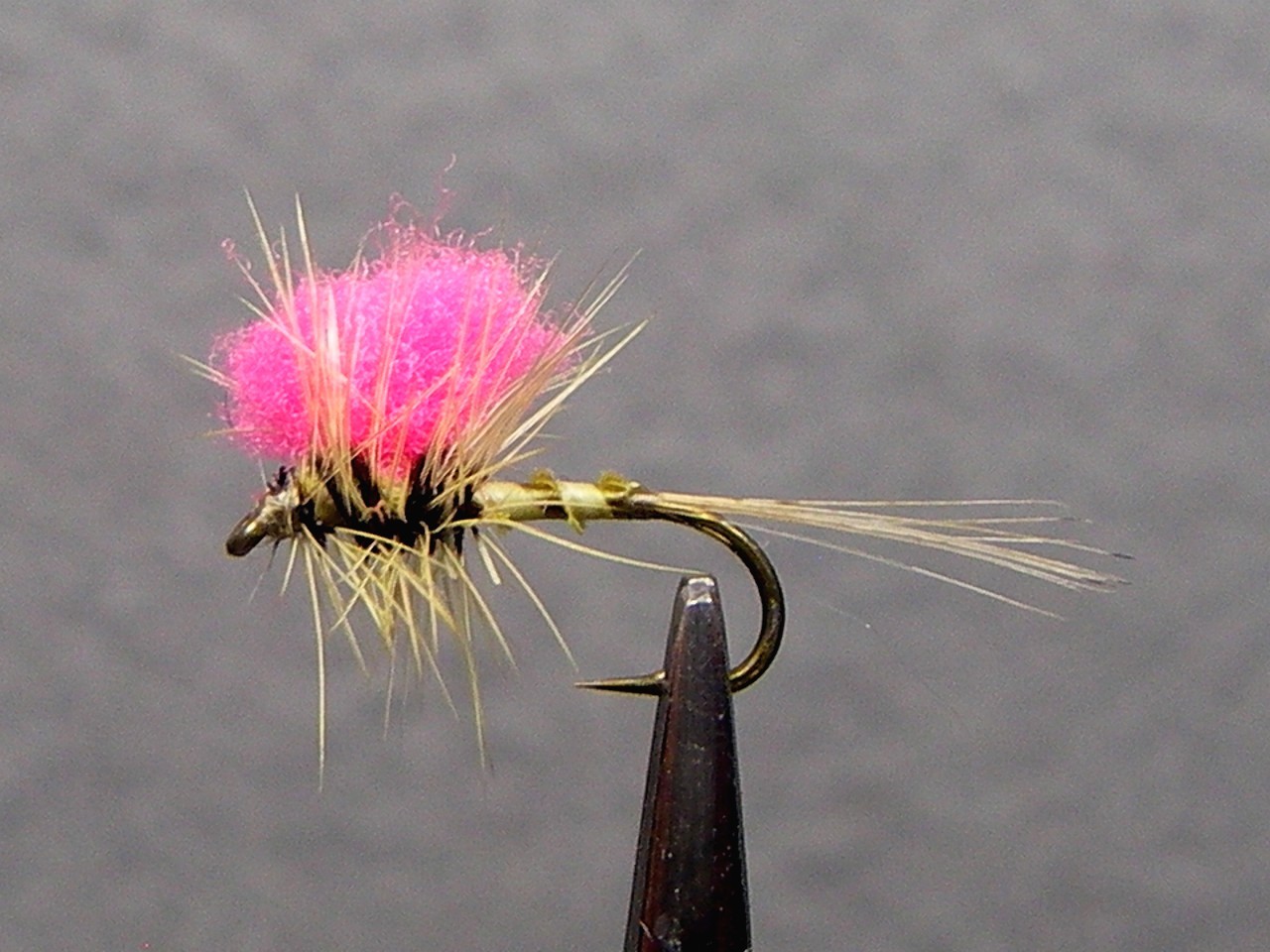
One Of The Best Adult Midge Patterns Around!

An Oldie but Goody!

Bill's Black Adult Midge V1
Originated By: Bill Fitzsimmons
Tied By: Larry O Jurgens
Hook: TMC 101
Size: 18 ~ 24
Thread: Black 14/0 Gordon Griffith
Abdomen: Tying Thread
Wing: Light Dun or White Float-Vis
Thorax: Peacock Herl For Sizes 18 & 20 and
Tying Thread For Sizes 22 & 24
Hackle: Dyed Dark Dun Whiting Saddle Hackle
Oversized by 1 Size e.g. Hook Size 20 = Hackle Size 18
Optional: Loon Water Based Head Cement

Tying Instructions Written By LoJ
Start the thread behind the hook eye and wrap a slightly tapered abdomen from the hook bend to the 1/3 hook shank point.
Tie in a sparse 1” piece of wing material at the 1/3 hook shank point.
Tie in the material so that it extends over the hook eye.
Wrap a threadbase to behind the hook eye.
Tie in the peacock herl and the hackle with the tips extending in front of the hook eye.
Move the thread to the hook shank mid-point.
Wrap the peacock herl to the hook shank mid-point.
Tie in with 2 thread wraps and cut off excess.
Wrap the hackle to the hook shank mid-point.
Tie in with 2 thread wraps and cut off excess.
Trim a “V” in the hackle barbules on the top of the hook shank.
Pull the wing material that is extended in front of the hook eye to the rear over the thorax.
Tie in and whip-finish with 4 wraps making the wraps towards the hook eye.
Trim a “V” in the hackle barbules on the bottom of the hook shank.
Trim the wing even with the hook bend.Optional: Apply water based head cement to the whip-finish.

Wednesday, November 04, 2009

A Baetis or General Purpose Winter Pattern

An excellent dredger/attractor pattern.
I fish this pattern all year as the bottom fly on any type of setup.


Olive Dredgemerger
By: Larry O Jurgens
Hook: TMC 2457, TMC 2487
Sizes: 12 ~ 22
Thread: Olive UTC 70
Tail: Medium Pardo Coq de Leon Tailing Barbules
Abdomen: Olive, UTC Ultra Wire (Size, Tyers Choice)
Wingcase and Wing Buds: Black Float Vis
Thorax: Brown Olive Superfine Dubbing
Head: Brown Olive Cyclops, or Coffee Montana Fly Co Lucent Tungsten Bead
Other: Super Glue and Hard as Hull “HaH” Head Cement

Notes:
This pattern works well for Baetis/Blue Wing Olives, Caddis and General Purpose when tied in the appropriate sizes.
I tie Caddis and General Purpose patterns in sizes 12~18 and Baetis/Blue Wing Olives in sizes 18~22 with a Coffee or Brown Olive Bead.
This pattern works well for a “searching” pattern when nothing discernible is hatching.

Tying Instructions
Slide bead onto the hook shank to behind the hook eye.
Start the thread behind the bead.
Tie in the tail material and wrap a smooth thread base partway down the hook shank.
Tail length equals the hook gape.
Return the thread to behind the bead wrapping a smooth thread base.
Tie in the abdomen wire behind bead.
Insert the wire end into the bead before tying in.
Overwrap a thread base towards the hook bend equal to the bead width.
Apply a thin coat of super glue to the thread base being careful to not to get glue on the tail fibers.
Wrap the abdomen wire partway down the hook bend covering the thread base.
Break the wire on the underneath side of the hook shank.
Optional: Coat the abdomen with HaH or Super Glue for durability.
Select a #2 pencil lead sized bunch of the wingcase/wing buds material.
Tie in behind the bead and overwrap to the end of the thorax area.
Dub the thorax to behind the bead.
Note: The thorax should be the same width and thickness as the bead.
Pull the wingcase over the thorax are and tie in with 2~3 wraps.
Divide the fibers in front of the hook eye and fold back for the wing buds.
Note: The wing buds should be on the sides of the wingcase, not on the hook shank sides like legs.
Trim the wing buds shorter than the abdomen (length is tyers choice).
Whip-finish using a minimum number of wraps.Optional: Apply 2 coats of HaH to the wingcase and/or to the abdomen for durability.
Give It A Try!!

Thursday, October 22, 2009

A Midge/Chironomid Pattern

In the summer I fish this pattern in lakes using sizes 12 ~ 16 using the “Antero Method” e.g. under a either a larger dry indicator or a THINGAMABOBBER. I use sizes 16 ~ 20 when fishing in rivers and streams


Click on the picture for an enlarged view.

Black Rainbow Chironomidge
By: Larry O Jurgens
Hook: TMC 200
Size: 12 ~ 20
Thread: Iron Gray 8/0 UNI Thread
Body: Black Rainbow #8089 Gϋtermann 40wt Machine Embroidery Thread
Head: Jet Black 11/0, #00081 or Black 11/0, #02014 or Black 15/0 #42014 Mill Hill Glass Bead
Head Cement: Brush on Super Glue and/or Hard as Hull (HaH) Head Cement

Notes:
I purchase the Mill Hill Glass Beads at either a Fabric or a Hobby Store.
I purchase the Black Rainbow #8089 Gϋtermann 40wt Machine Embroidery Thread at Jo-Ann Fabric and Craft Store.

Tying Instructions
Slide the bead onto the hook shank.
Start the tying thread behind the bead.
Tie in the body material behind the bead.
Apply a coat of Super Glue to the hook shank for durability.
Wrap a body from above the hook barb to behind the bead.
Body thickness is tyers choice.
Tie in and cut off excess.
Wrap and whip-finish a tapered collar behind the bead.
Apply Super Glue or HaH to the body and bead for durability.

Saturday, October 17, 2009

Jay Zimmerman's Backstabber Carp Fly

I have posted Jay's Backstabber Carp Fly, tying video.
To view the video go to Jay Ziimerman's Backstabber Leech #6 Dated 6/30/09 at the following; http://lojsflytyingbugstuff.blogspot.com/2009/06/jay-ziimermans-backstabber-leech-6.html

Tuesday, October 13, 2009

Bill's Black Adult Midge

This pattern was originated by Bill Fitzsimmons, a previous owner of Taylor Creek Fly Shop in Basalt, Colorado.


The following is the material list and tying instructions I use. ~LoJ

Bill's Black Adult Midge
Originated By: Bill Fitzsimmons
Tied By: Larry O Jurgens
Hook: TMC 101
Size: 18 ~ 24
Thread: Black 14/0 Gordon Griffith
Abdomen: Tying Thread
Wing: Light Dun or White Float-Vis
Thorax: Peacock Herl For Sizes 18 & 20 and
Tying Thread For Sizes 22 & 24
Hackle: Dyed Dark Dun Whiting Saddle Hackle
Oversized by 1 Size e.g. Hook Size 20 = Hackle Size 18
Optional: Loon Water Based Head Cement

Tying instructions written by LoJ
Start the thread behind the hook eye and wrap a slightly tapered abdomen from the hook bend to the 1/3 hook shank point.
Tie in a sparse 1” piece of wing material at the 1/3 hook shank point.
Tie in the material so that it extends over the hook eye.
Wrap a threadbase to behind the hook eye.
Tie in the peacock herl and the hackle with the tips extending in front of the hook eye.
Move the thread to the hook shank mid-point.
Wrap the peacock herl to the hook shank mid-point.
Tie in with 2 thread wraps and cut off excess.
Wrap the hackle to the hook shank mid-point.
Tie in with 2 thread wraps and cut off excess.
Trim a “V” in the hackle barbules on the top of the hook shank.
Pull the wing material that is extended in front of the hook eye to the rear over the thorax.
Tie in and whip-finish with 4 wraps making the wraps towards the hook eye.
Trim a “V” in the hackle barbules on the bottom of the hook shank.
Trim the wing even with the hook bend.
Optional: Apply water based head cement to the whip-finish.

Thursday, October 01, 2009

Baetis Time Again!

Baetis time is here again!
When fishing, I fish this fly as a dropper or the bottom fly in a two fly set-up. I have much better luck when using 6X or 7X tippet. Be prepared to lose some flies as the fish critters take this fly with gusto!
Good Luck!!!


Pheasant Tail Baetis
By: Larry O Jurgens
Hook: Dai-Riki #075
Size: 18 ~ 20
Thread: Brown 14/0 Gordon Griffith
Tail: Pheasant Tail Feather Barbules See Notes
Abdomen: Pheasant Tail Feather Barbules See Notes
Rib: Gun Metal Blue X-Small Ultra Wire
Wingcase: Pheasant Tail Feather Barbules See Notes
Thorax: Olive Brown Hare-Tron Dubbing
Legs: Pheasant Tail Feather Barbules See Notes
Head: Tying ThreadOptional: Loon Water Based Head Cement

Notes:
Use a Ringneck Pheasant secondary tail feather.
Pheasant tail feather barbules used on this pattern have no brown on the barbules.
The barbules are a "Natural Olive and Black Speckled. "


Tying Instructions
Start the thread at the hook shank mid-point and wrap to above the hook barb.
Strip 6 ~ 8 pheasant tail barbules from a secondary tail feather.
Tie in the pheasant tail, barbule tail with two thread wraps.
Tail length equals hook shank length.
Do not cut off excess.
Fold the excess pheasant tail back over the hook bend.
Tie in with two thread wraps.
Do not cut off excess.
Tie in the rib wire and overwrap to two eye lengths behind the hook eye.
Cut off the excess.
Wrap the pheasant tail barbules forward to two eye lengths behind the hook eye.
Do not cut off excess.
Counter-wrap the rib wire to two eye lengths behind the hook eye, making 5 ~ 7 “ribs”.
Cut off the excess.
Fold the excess pheasant tail back towards the hook bend. Tie in at the hook shank mid-point.
Do not cut off excess.
Dub a thick thorax to one eye length behind the hook eye.
Pull the pheasant tail barbules over the thorax and tie in behind the hook eye.
Divide the pheasant tail barbules in half. Tie in on the sides of the hook shank and overwrap to the front of the thorax for the legs.
Wrap and whip-finish a medium sized head.
Trim the legs even with the back of the thorax.
Optional: Apply water based head cement to the whip-finish.


Monday, September 14, 2009

A Great Fall Pattern Courtesy Of Jay Zimmerman

Here is another proven pattern from the vise of Jay Zimmerman.
This is a very effective pattern in the fall especially when fishing pocket water.
This is an attractor pattern and doesn’t necessarily represent any natural insect.
Be that as it may, the fish seem to like it just fine.
Note: If it is from the fertile mind and nimble fingers of JZ it’s gotta be good!


Click on the picture to see an enlarged view.

Redneck Peacock Nymph
(A Fall Attractor)

By: Jay Zimmerman
Tied By: Larry O Jurgens
Hook: TMC 2487/TMC 2457/Dai-Riki 135
Sizes: 16 & 18
Thread: FL Fire Orange UTC 70
Body: Peacock Herl
Rib: Silver, Small Ultra Wire
Flashback: Opal Mirage or Pearl, Medium UTC Tinsel
Neck: FL Fire Orange UTC 70 Band
Head: 3/32 or 7/64 Copper Tungsten Bead

Tying Instructions
Place the bead onto the hook shank.
Start the thread behind the bead and wrap a thread base half the bead width.
Tie in the rib wire, flashback material and 3~4 strands of peacock herl on the top of the hook shank.
Wrap a smooth thread base over the materials to appx half-way down the hook bend.
Return the thread to half the bead width behind the bead.
Wrap the peacock herl forward to half the bead width behind the bead.
Tie in on the bottom of the hook shank and cut off excess.
Pull the flashback material forward to half the bead width behind the bead.
Tie in and cut off excess.
Counter wrap the rib material in making 4~5 segments to half the bead width behind the bead.
Tie in and cut off excess.
Wrap a wide thread band behind the bead and whip-finish.
Apply HaH head cement to the whip-finish.